When a creek leaves its banks and water comes into a house, the homeowners policy is usually not the one that pays. Flood damage is normally a flood-policy question, either the National Flood Insurance Program or a private flood carrier. Knowing which policy applies before you call saves days of back and forth.
The short answer
FloodSmart, the federal site for the NFIP, says it plainly: most homeowners and renters insurance does not cover flood damage. Creek overflow is the textbook flood. If the East Branch of the Brandywine rises and water crosses your yard into the basement, expect your homeowners insurer to point you to a flood policy.
What "flood" means to the NFIP
The cause of the water decides coverage. The NFIP defines a flood as a general and temporary condition of partial or complete inundation of two or more acres of normally dry land, or of two or more properties, at least one of which is yours. The causes it lists include overflow of inland or tidal waters, unusual and rapid runoff of surface water from any source, and mudflow.

That two-property, two-acre test is why a creek flood fits so easily. When the Brandywine rises, it rarely floods only one lot.
Where homeowners coverage still matters
Homeowners policies are built for sudden, accidental water from inside the house: a supply line that bursts, a water heater that splits. They usually exclude surface water and flood. Some homeowners policies offer a water backup endorsement for sewer or sump overflow that is not caused by a flood. If your basement took water because your sump lost power in an ordinary storm, that endorsement, not flood insurance, is usually what applies.
FloodSmart adds one detail that trips people up. Sewer backup is covered by flood insurance only if it directly results from flooding. A sewer that backs up because of a clogged line is not a flood claim.
Two coverages inside one NFIP policy
NFIP policies split coverage into building and contents, each with its own limit and deductible:
| Coverage | Home limit | Examples FloodSmart lists |
|---|---|---|
| Building | Up to $250,000 | Electrical and plumbing systems, furnaces, water heaters, built-in appliances, permanently installed carpet, foundation walls, detached garages |
| Contents | Up to $100,000 | Clothing, furniture, electronics, washer and dryer, portable air conditioners |
Many owners buy only building coverage. After a flood, that leaves furniture, rugs and stored belongings uninsured.
The basement problem
Downingtown and other creek towns have a lot of finished basements. FloodSmart lists "personal property kept in basements" among items an NFIP policy does not cover. Building items there, such as the furnace and water heater, are covered under building coverage, but a finished-basement sofa and TV usually are not. That surprises many people the first time they file.
What a Downingtown flood looks like on paper
The NWS gauge on the East Branch below Downingtown lists Jefferson Avenue, Business Route 30 and Pennsylvania Avenue flooding at 11 feet, and residential basements flooding along Jefferson Avenue at 12. Water from that crest is unmistakably flood under the NFIP definition. A homeowner on that street would file with the flood carrier, not the homeowners carrier, for basement damage.
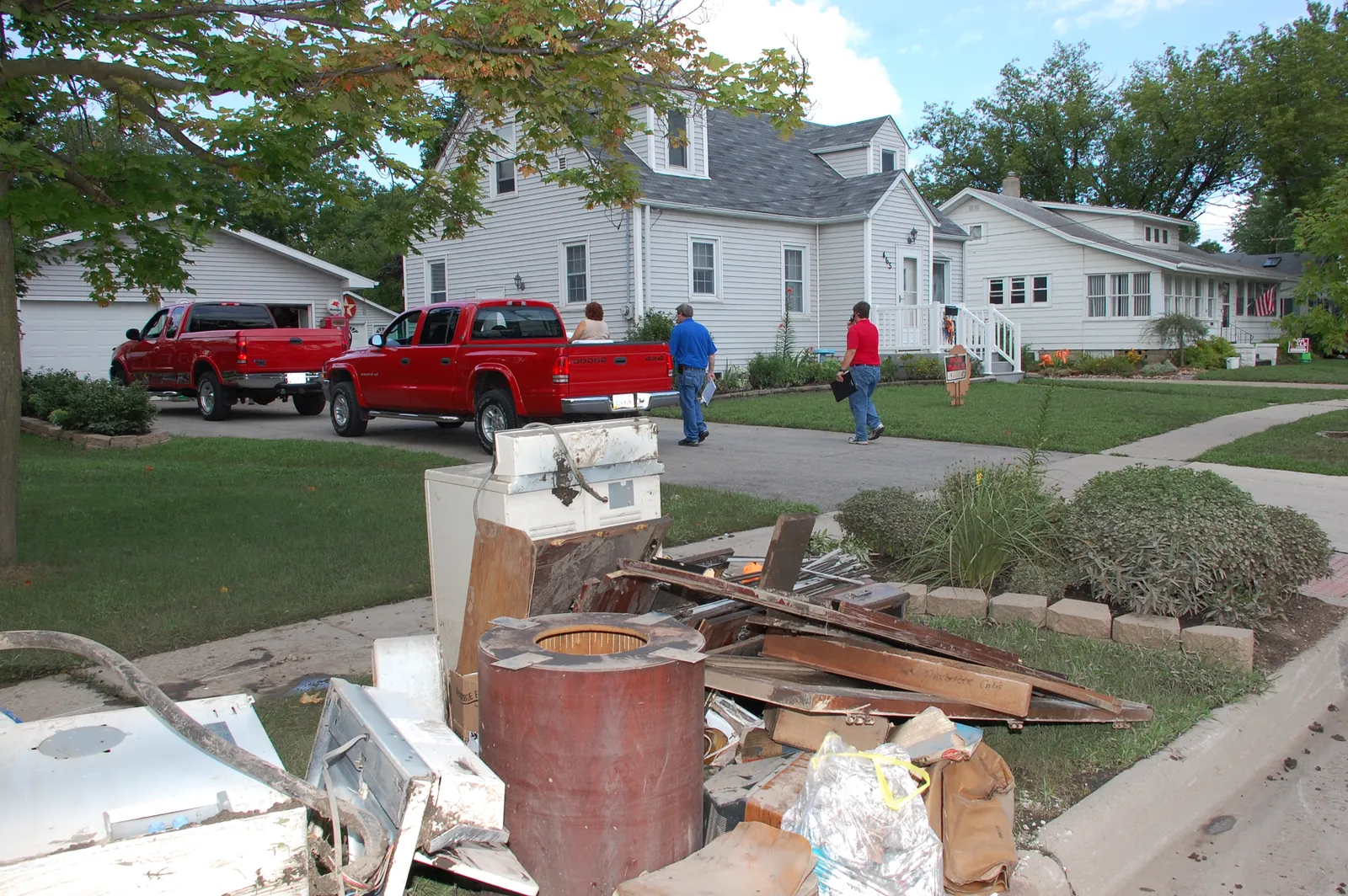
The cleanup and the claim go hand in hand. The flood damage restoration notes for Downingtown describe what the provider does on site.
Filing with the right carrier
- Call your agent and ask which policy, if any, covers the loss. Mention the source of the water.
- If you have NFIP coverage, report the claim promptly and write down the claim number.
- Photograph everything before cleanup, including the waterline on the walls.
- Start drying once you have documented the damage; your policy expects you to prevent further loss.
- Keep receipts for emergency costs.
A flood restoration provider can build a careful photo and moisture record for your adjuster. See flood insurance claim documentation for what that file should include. Neither this site nor its providers act as public adjusters, and your insurer decides the claim.
If you do not have flood insurance
Without a flood policy, a creek flood usually is not covered by homeowners insurance. If a federal disaster is declared, FEMA assistance and SBA disaster loans may help, but those are not insurance and have their own limits. NFIP policies generally take 30 days to start, so buying one after a forecast does not cover that storm.
Sources
- FloodSmart, What flood insurance covers and the NFIP flood definition
- National Weather Service, East Branch Brandywine Creek below Downingtown (DWNP1)
- Pennsylvania Insurance Department, insurance.pa.gov